
A moldy leather bag can be saved in most cases: dry it, remove the mold dry, then clean and condition the surface. This guide covers each step, how to use baking soda against the smell and which remedies to avoid. You will also learn how to store a leather travel bag so the mold does not come back.
Why does mold grow on a leather bag?
Leather grows mold when it sits in damp, warm air with little ventilation. The spores feed on the fats and waxes in the leather, then form white, green or black spots.
- A bag put away while still damp after a rainstorm.
- A plastic cover that traps moisture against the leather.
- A basement, a garage or a closet against a cold wall.
- A closed, full bag where air cannot circulate.
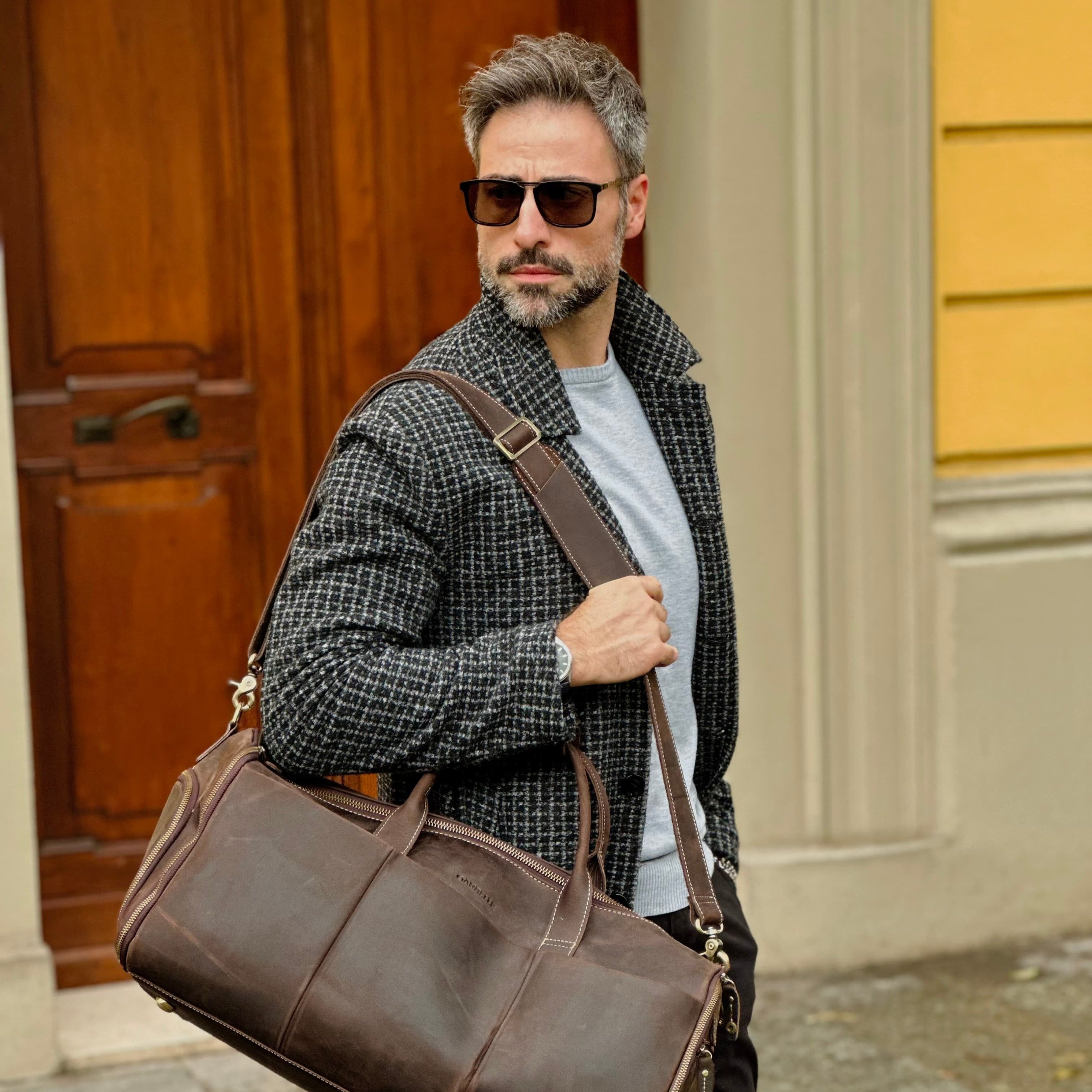
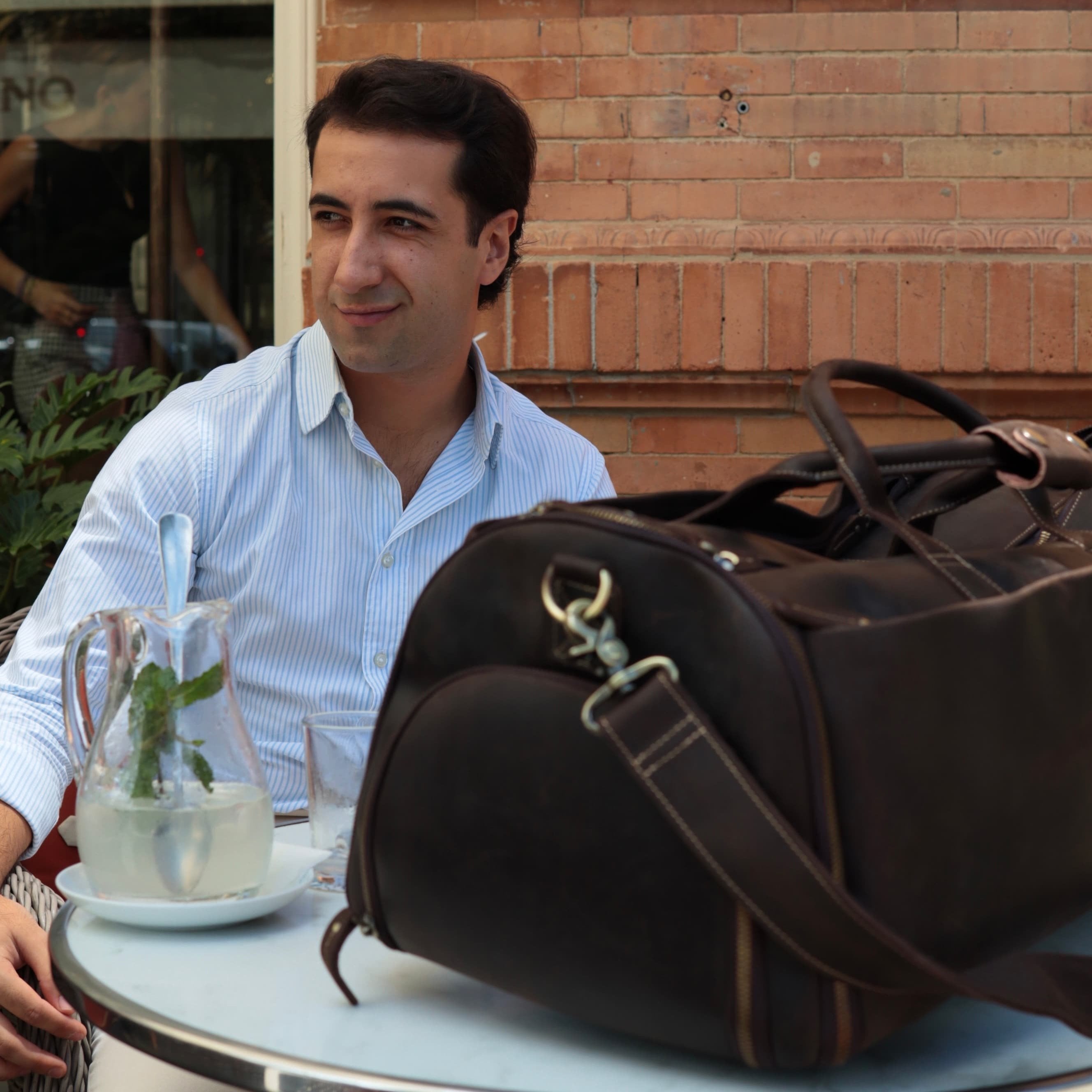
According to the Canadian Conservation Institute (note revised in 2016), mold grows readily from 65% relative humidity. It appears in about 2 days at 90%, 10 days at 80% and 100 days at 70%. Garbelle leather weekenders and garment bags, made of waxed full-grain cowhide, are treated as described below.
How can you tell mold from a white wax bloom?
Rub the spot with a fingertip: a wax bloom fades under the warmth of your hand, while mold stays or smears. Waxed leather sometimes brings its wax to the surface in cold weather, with no harm to the bag.
| Sign | Wax bloom | Mold | Water stain |
|---|---|---|---|
| Look | Even white haze, slightly shiny | Fuzzy white, green or black spots | Darker ring with sharp edges |
| Smell | None | Musty, basement smell | None |
| Under a fingertip | Fades | Stays or smears | Stays |
| What to do | Buff with a soft cloth | Follow the steps below | Dampen the whole panel evenly |
When in doubt, treat the spot as mold. Dry brushing does no harm to a wax bloom.
How do you clean a leather bag with mold?
Clean a moldy leather bag outdoors, once the leather is dry, and remove the mold dry before using any liquid. Wear disposable gloves and an N95 mask, since the spores can irritate your airways.
- If the leather is damp, let it air-dry in the shade, away from any heat source.
- Brush the surface with a soft brush, guiding the spores toward the vacuum nozzle.
- Vacuum the whole bag in two crossing passes, even where nothing shows.
- Wipe remaining marks with a cloth barely dampened with equal parts water and distilled white vinegar.
- Let the bag dry open, in the open air, for at least 24 hours.
- Apply a thin coat of leather conditioner, since cleaning dries the leather: see our guide to leather conditioner for bags.
If the mold smears under the brush, the leather is not dry enough: wait before going on. Test the vinegar mix on a hidden spot, under a flap. To choose the cleaner and conditioner, see our guide to leather bag cleaning.
Does baking soda work on moldy leather?
Yes against the smell, no as a cleaner rubbed into the leather. Baking soda absorbs the musty smell, but this alkaline powder dries leather and leaves white marks on a dark shade. Its use on a stain is covered in our guide to removing an old oil stain from leather.
| Remedy | On moldy leather | Precaution |
|---|---|---|
| Baking soda | Yes, against the smell, placed inside the bag | Never rubbed on the leather as a paste |
| Diluted white vinegar | Yes, on marks left after brushing | Equal parts with water, test on a hidden spot |
| Mild soap | Yes, on the fabric lining | Well-wrung cloth, never too much water |
| Rubbing alcohol | With caution | Can fade the leather, always test first |
| Bleach | No | Discolors and damages leather |
| Hair dryer, radiator | No | Heat stiffens and cracks leather |
White vinegar lifts marks left on the surface, but it does not reach mold that has set deep in the leather. Always apply a conditioner after cleaning with vinegar or alcohol. Other home remedies are sorted in our guide on how to clean a leather bag at home.
How do you get the musty smell out of leather?
Air out the empty bag with every pocket open, then let baking soda absorb the smell for several days. Repeat for as long as the smell lingers.
- Set a small dish of baking soda inside the closed bag, away from the leather.
- Use a fabric pouch filled with baking soda if a dish could tip over.
- Sprinkle a thin layer on the fabric lining, leave it overnight, then vacuum.
- Stuff the bag with crumpled tissue paper and change it every day.
- Leave the bag outdoors, in the shade, for a few hours a day.
The inside often holds the smell longer than the leather. A cotton-polyester lining, like the one in Garbelle carry-on travel bags, accepts a damp cloth and a drop of mild soap. A suede interior should only be brushed dry, as our guide on how to take care of a suede bag explains.
Should you throw out a leather bag with mold?
No, in most cases: surface mold comes off full-grain leather. Take the bag to a leather repair specialist if it stays stained, turns stiff or crumbles after cleaning. On light leather, the right steps are in our guide on how to care for white leather.
Spores can trigger reactions in people with allergies or asthma. If that applies to you, let someone else or a leather professional handle the cleaning.
How do you store a leather travel bag to prevent mold?
Store the bag clean, dry and empty, in a ventilated spot where humidity stays below 65%. These simple habits keep mold from coming back:
- Let the bag air-dry for 24 hours after every trip, especially after rain.
- Empty it and stuff it with tissue paper to keep its shape.
- Slip it into a cotton dust cover, never into plastic.
- Avoid basements, garages and closets against a cold wall.
- Take it out and air it every two or three months.
- Condition the leather every 3 to 6 months.
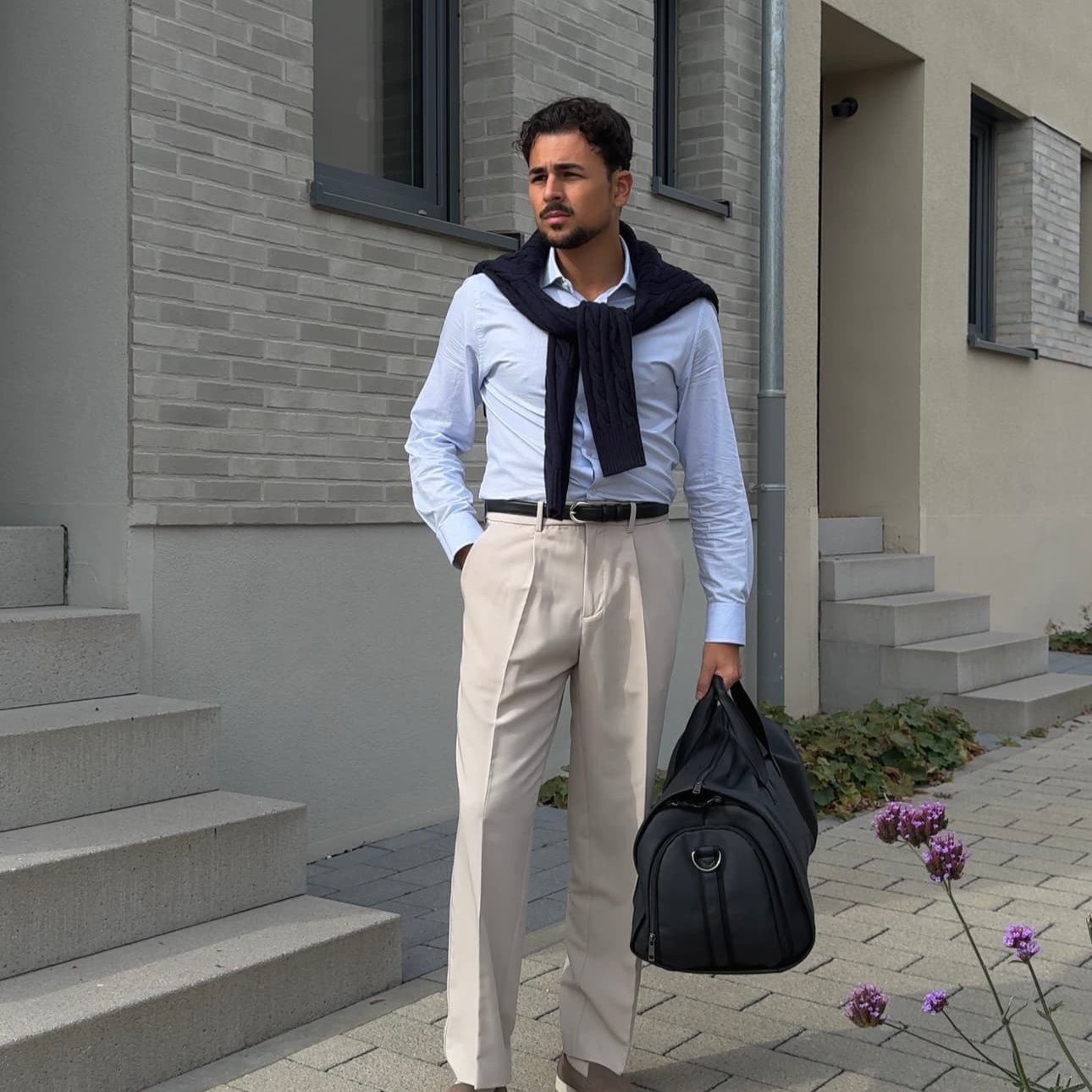
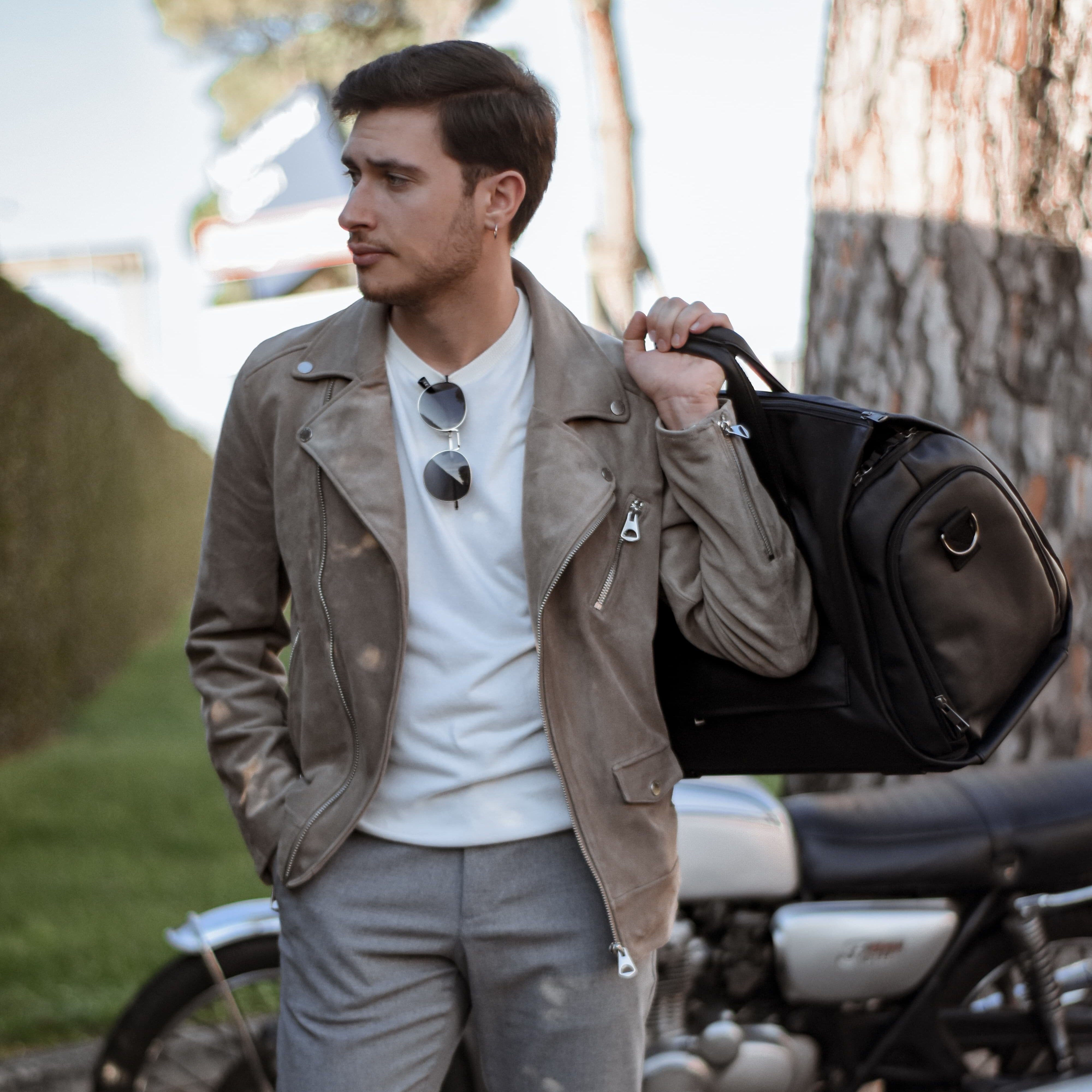
The Garbelle large carry-on travel bag pairs waxed full-grain cowhide with a cotton-polyester lining that wipes clean. For trips with a suit, the Garbelle carry-on garment duffel, rolling model, keeps your suit in its built-in sleeve, away from your shoes. Garbelle covers its bags with a 10-year warranty against manufacturing defects.
Compare every model on the page for Garbelle weekenders and garment bags.